
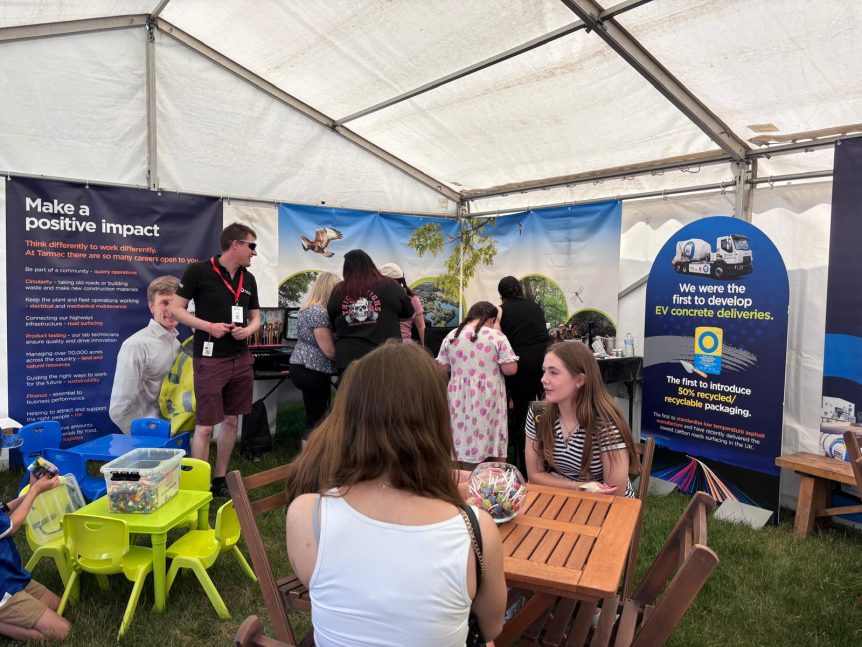
My name is Olivia and I’m taking part in work experience with Tarmac this week to gain a deeper understanding of event marketing, as well as PR, and why businesses use events to engage people and inform the local communities.
As I am interested in the industry, I have interviewed Henrietta McCabe to gain a better and a wider understanding of events marketing and the ways they impact local communities.
How would you define social value in the context of the construction?
Social value in construction is about making a positive difference to the communities where we work. Even though companies can operate on a national or global scale, every project is rooted in a local area with real people, local drivers, and local needs. Delivering social value means recognising that impact and giving something meaningful back, whether through supporting local employment, participating in community initiatives, or helping improve the environment and infrastructure. It’s about ensuring the benefits of a project extend beyond the construction itself and genuinely strengthen the community around it.
Why did you attend the Suffolk Show?
I was asked to coordinate our attendance at Suffolk Show as it is a key area where we operate as a business, and it enables us to engage directly with local residents, share information about our plans, and reinforce our commitment to the local community.
Why do you want to involve the local community ?
We often involve the local community for a number of reasons. One being because it’s important to help them understand the safety aspects of large vehicles on the road. Engaging the community at Suffolk Show was a timely opportunity to raise awareness, keep everyone safe, and show that we take our responsibility to the local area seriously.
How would you ensure local stakeholders feel heard and involved in a project?
Through local events, we make sure stakeholders feel genuinely involved by keeping communication open, accessible, and meaningful. They create opportunities for informal conversations — just like community drop‑ins with tea and coffee or sessions with local councillors — so people can speak openly and feel comfortable raising concerns. It’s important that this engagement is authentic, not transactional.
We also focus on creating real benefits for the community, like job and training opportunities for younger generations, which helps build a more diverse and inclusive workforce. When land or resources are gifted back to the community, it demonstrates long‑term commitment and shows that the organisation isn’t just operating in the area but is part of it. This combination of clear communication, genuine interaction, and visible investment helps stakeholders feel respected, listened to, and truly involved.
