
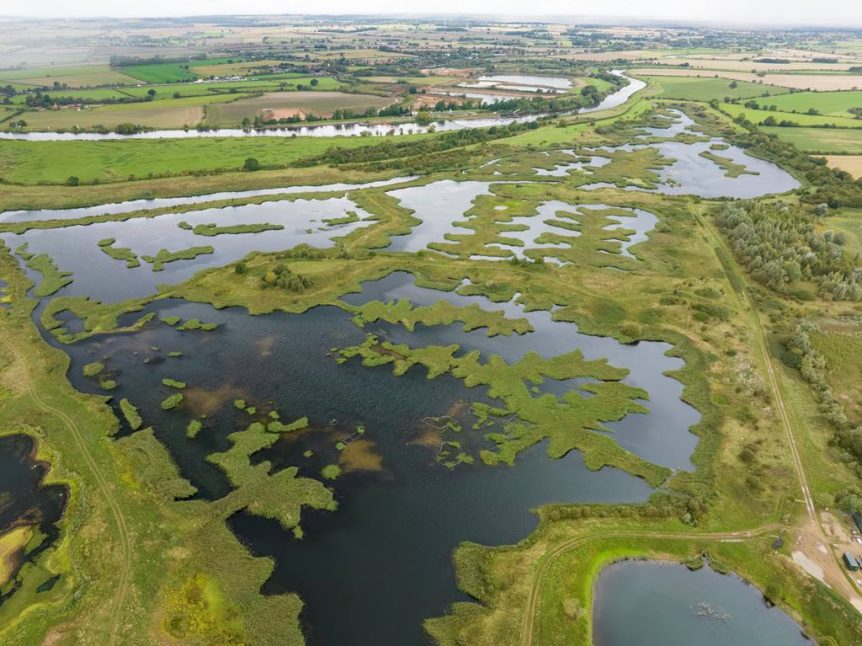
 Langford Lowfields Nature Reserve is a model of how careful land management, long-term planning, and strong partnerships can transform a working quarry into a nationally important habitat. Situated northeast of Newark, the 120-hectare reserve stands as the largest reedbed in the East Midlands, supporting an impressive diversity of wildlife while providing public access for health, wellbeing, and education.
Originally designed to focus on rare and decline wetland species such as the Bittern; a brown heron like species, that lives in reedbed. The reserve’s creation is the result of over three decades of collaboration between Tarmac, landowner Trinity College Cambridge, and the Royal Society for the Protection of Birds (RSPB).
Vision and planning
Planning permission for sand and gravel extraction at Langford was first granted in 1988, allowing for the phased removal of 11 million tonnes of material from a 175-hectare site. From the outset, the project included progressive restoration to reedbed, wetland, hay meadow, scrub, wet woodland, and rough grassland using on-site materials.
Over 30 years, the quarrying process was integrated with restoration planning to create a mosaic of Section 41 priority habitats. Today, around 70 hectares of reedbed dominate the reserve, half of which is fully established.
The long-term goal – to transfer ownership of the restored land to the RSPB – was recently achieved, securing its future as a conservation site and public amenity.
 Professional collaboration
The partnership between Tarmac, Trinity College, and the RSPB was built on integrity, shared vision, and professional expertise in surveying, environmental science, minerals planning, and land management. Each party contributed actively, ensuring restoration met high ecological standards.
Physical landforming was conducted by Tarmac, while the RSPB led ecological surveys, planting, and aftercare. To address material shortages for restoration, under-digging techniques generated extra silts and clays, enabling a far superior habitat design.
The final land transfer, originally planned in phases, was completed in a single transaction due to COVID-19, with all technical and legal details carefully managed to modern standards.
Community and stakeholder engagement
From the start, the scheme gained strong support from Nottinghamshire County Council, Collingham Parish Council, and the local community. Quarterly stakeholder meetings kept communication open, and co-located offices for Tarmac and RSPB teams encouraged daily collaboration.
A team of 30 local volunteers support the reserve’s management, greet visitors, and conduct wildlife monitoring. Volunteers also contributed to a 2010 archaeological dig, which uncovered evidence of a Roman settlement, paleochannels of the River Trent, and other historic finds.
Plans are underway for a dedicated dog-walking area to meet community needs while protecting sensitive wildlife. Annual aftercare reports to the county council ensure lessons learned guide ongoing habitat management.
 Environmental outcomes
Langford Lowfields has supplied one-third of Nottinghamshire’s sand and gravel requirements while delivering a fourfold Biodiversity Net Gain compared to the agricultural land that previously occupied the site.
Inland reedbeds like Langford’s are vital as sea level rise threatens coastal equivalents. Restoration design included “finger-shaped” reed edges, open water, and island features to attract key species. A large outfall sluice, complemented by six smaller sluices, manages water levels and even allows critically endangered eels to enter the site.
The community’s perception of the quarry has been notably more positive than that of similar sites, thanks to the clear integration of wildlife and public benefits into the project. This community support has been invaluable in helping us achieve our final outcomes. Public access is carefully managed to minimise disturbance while enabling greater engagement, with visitor numbers steadily increasing since the site opened in 2014.
Innovation and best practice
Langford’s approach of embedding habitat creation into the full lifecycle of a quarry has been adopted as best practice across Tarmac’s UK operations, with 39 active partnerships now in place.
The site also forms part of the “Bigger and Better in the Trent & Tame” vision, developed in 2014–15 through workshops involving mineral planners, wildlife trusts, and conservation groups. This initiative aims to create connected wetlands along the River Trent catchment, securing ecological benefits at scale.
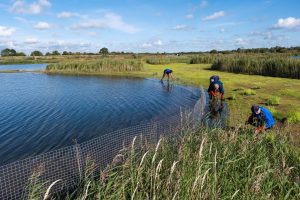 Sustainability in action
Langford demonstrates a significant shift in sustainable post-extraction land use. Operational measures include a conveyor system for sand and gravel, reducing emissions compared to dump trucks, and plans to generate hydropower from a nearby weir.
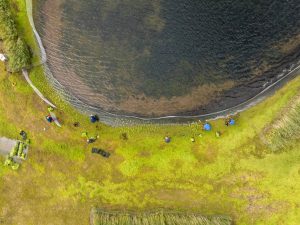
The reserve is managed under a detailed monitoring programme, including annual breeding bird counts, monthly waterbird surveys, electro-fishing, drone photography, reed health assessments, and water quality tracking, informing decisions that enable tailored management to maintain and increase flourishing wildlife populations.
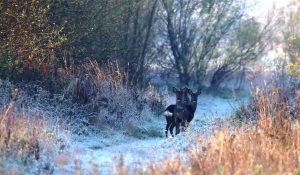
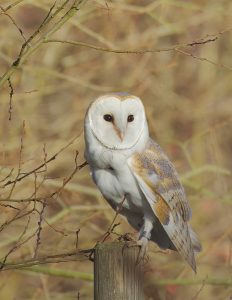
To date, 220 bird species have been recorded, with 51 breeding in 2023, including bitterns and marsh harriers. Otters, harvest mice, badgers, and water shrews also inhabit the site. Impressively, the wetland’s carbon capture rate outperforms rainforest by 70%.
A lasting legacy
Beyond its environmental achievements, Langford Lowfields delivers social value, attracting around 800 monthly visitors and serving as a training ground for university students and conservation professionals.
RSPB staff are active in the Trent Gateway partnership, which is working to create a thriving river corridor for wildlife and people along the River Trent.
From a working quarry to a thriving wetland, Langford Lowfields is a testament to what can be achieved when industry, academia, and conservation organisations unite behind a shared vision. Its legacy is not just a restored landscape, but a blueprint for sustainable development that benefits both people and nature.
