
By Chris Pears-Ryding, Commercial Director – Blocks
The conversation around the Future Homes Standard has, quite rightly, focused attention on reducing operational carbon in our homes. Improving energy performance, strengthening fabric efficiency and reducing the emissions associated with heating and power use will play a critical role in meeting the UK’s long-term climate ambitions.
However, as the industry continues to refine how homes perform once occupied, we must be careful not to overlook the carbon that is already built into them before the keys are even handed over.
This was a central theme during a recent roundtable hosted by Netmag Media, where a group of industry professionals gathered to discuss how the Future Homes agenda is evolving and what more can be done to support genuinely low-carbon construction. One of the most interesting conclusions from the discussion was that while operational carbon is receiving the majority of regulatory attention, embodied carbon remains an area where meaningful gains can still be made today.
Embodied carbon, after all, is immediate. Once materials are produced and installed, those emissions are effectively locked in. Unlike operational emissions, they cannot be improved through retrofits or changing energy sources later in the building’s life. That reality means the material choices made during design and specification have an outsized impact on the true lifetime carbon footprint of a home.
For regulators and house builders alike, the challenge is therefore one of balance. Operational performance must continue to improve, but it should not come at the expense of overlooking materials that already offer strong embodied carbon credentials while supporting the same fabric-first ambitions.
This is where aircrete blockwork deserves renewed attention.
Aircrete has long been valued for its thermal performance and buildability, but its carbon effectiveness is sometimes under-recognised in wider policy conversations. The material’s cellular structure means it uses significantly less raw material per cubic metre than many traditional masonry products. Combined with modern manufacturing processes and the durability expected from masonry construction, this can result in walls that deliver both strong thermal performance and relatively low embodied carbon.
Importantly, these benefits are not theoretical. They exist in products that are already widely available and familiar to the housebuilding sector.
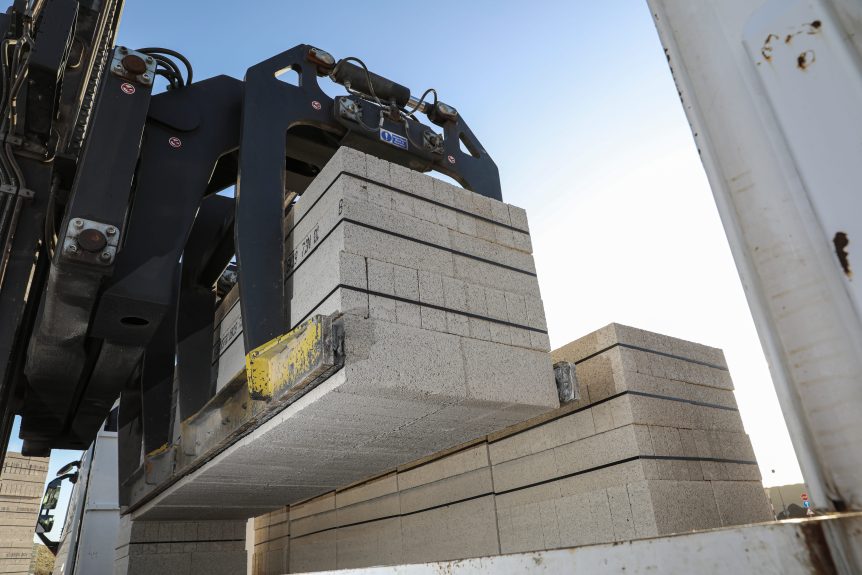
At Tarmac, our own Durox range reflects how modern aircrete technology continues to evolve. Durox blocks were designed to support contemporary construction methods while maintaining the characteristics that have made aircrete a mainstay of UK housebuilding. Their large-format design improves installation efficiency on site, while high strength ratings allow them to be used confidently across a variety of structural applications.
Just as importantly in the context of Future Homes, their thermal efficiency supports the fabric-first approach that underpins the direction of travel in UK housing policy. When combined with appropriate insulation and wall systems, aircrete can play a meaningful role in achieving the thermal standards that new homes will be expected to meet.
Durox also demonstrates the versatility that makes aircrete particularly attractive from a whole-building perspective. Supabloc units provide a flexible solution for above-ground masonry construction, while foundation blocks allow the same material family to continue below ground in challenging soil conditions. Floor blocks are designed to work with precast beam systems in suspended floors, and dedicated coursing units help minimise thermal bridging while reducing material waste during installation.
Taken together, this integrated approach helps designers and builders maintain consistency across the building envelope while supporting both thermal performance and construction efficiency.
None of this is to suggest that aircrete, or indeed any single material, provides a silver bullet for reducing carbon in housing. The discussions with peers across the industry made it clear that delivering genuinely low-carbon homes will always require collaboration across designers, material manufacturers, regulators and builders.
What aircrete does demonstrate, however, is that there are already proven materials capable of contributing positively to both sides of the carbon equation. By delivering strong thermal performance while maintaining relatively low embodied carbon, it shows that operational and embodied considerations do not have to compete with one another.
As the industry continues to navigate the direction set by the Future Homes Standard, it is clear that this is only part of a much broader conversation. While operational performance will remain a critical focus, there is an equally important opportunity to take a more balanced, whole-life view of carbon. By giving embodied carbon the same level of consideration, and by making the most of materials that already perform strongly in this space, we can ensure that the homes we build today are not only efficient to live in but responsible in the way they are constructed from the outset.
Ultimately, that is what future homes should represent: buildings that perform better, are built smarter, and leave a lighter footprint from the very beginning.
