
Originally published on highwaysindustry.com
Across the highways and construction sectors, the need to reduce carbon emissions while maintaining productivity has never been greater.
With the industry working towards ambitious net zero targets by 2030, meaningful change is required not only in materials and technology but also in how those materials are transported. One of the most effective ways to make an immediate impact is through the greater use of large, tipping articulated lorries for bulk material delivery.
For major infrastructure and highways projects, the difference between articulated tippers and traditional 8-wheeled vehicles is significant. The most obvious advantage is capacity. Articulated tippers offer more than 35% greater payload capacity than an 8-wheeler, allowing far more material to be moved in a single journey. When scaled across a project, this efficiency quickly becomes clear.
To move 1,000 tonnes of material using articulated tippers requires just 36 road movements. The same quantity transported by 8-wheelers would require 52 movements. That equates to around 35% fewer deliveries needed to move the same volume of material.
Reducing the number of journeys has a direct environmental benefit. With fewer vehicles on the road and fewer trips required, the carbon footprint associated with transporting materials is significantly lower. In practical terms, this approach can reduce carbon emissions by around 32% per tonne of material delivered.
Safety is another important factor. Every vehicle movement represents a potential interaction with the public highway network, construction sites, and other road users. By reducing the number of deliveries from 52 to 36 for the same volume of material, there are 16 fewer occasions where road safety risks can arise. Fewer journeys mean fewer site entries and exits, less congestion around worksites, and ultimately a safer operational environment.
The shift also addresses a challenge currently affecting the entire logistics sector – the shortage of professional drivers. Across the UK and wider Europe, the availability of qualified HGV drivers remains under pressure. By moving larger volumes of material per journey, articulated tippers help reduce the number of drivers required to service projects, making transport operations more efficient and resilient.
Understandably, the move towards larger articulated tippers can sometimes raise questions around safety, particularly when it comes to tipping operations. These concerns are valid and important, but modern vehicle technology and strict operating procedures mean that the risks can be effectively managed with the right controls and safeguards.
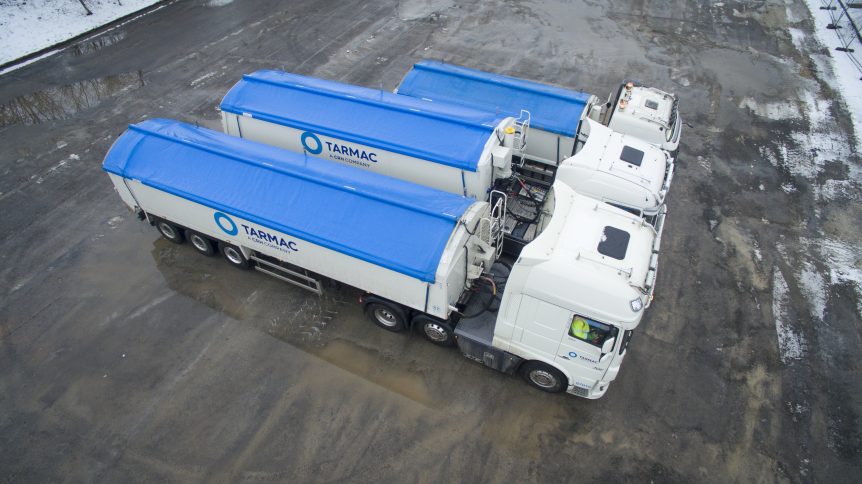
For example, Tarmac’s articulated tipper fleet is fitted with inclinometers that prevent the body from tipping if the vehicle is positioned on a slope greater than four degrees. This ensures tipping only takes place on suitably level ground. In addition, the tractor unit must be aligned in line with the trailer before tipping can occur, maintaining stability throughout the process.
Further safety systems are also built into the fleet.
Overhead cable detectors help prevent contact with power lines and other elevated hazards, while raised body alarms provide clear alerts if the vehicle attempts to move while the body is still elevated. Together, these measures create a protocol designed to protect drivers, sites, and infrastructure.
For Tarmac, the move towards articulated tippers is already well underway.
Around 60% of the company’s daily material movements now take place using articulated tipper vehicles. This reflects a clear commitment to improving efficiency and reducing emissions.
Reaching the industry’s net zero ambitions will require changes across every stage of the supply chain. While new technologies and low carbon materials will play a vital role, behavioural shifts in how the industry operates are equally important. The increased use of articulated tippers is just one example of how smarter decisions can deliver immediate benefits.
