
RUBBER MODIFIED ASPHALT
Sustainable asphalt for road resurfacing with recycled tyre rubber
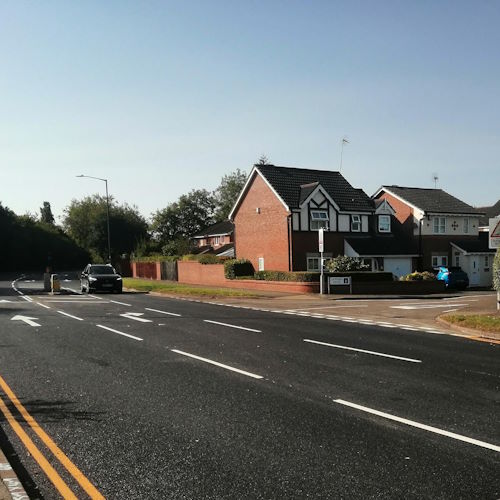
Queensway and Suffolk Street, Leamington Spa
Client
Warwickshire County Council
Contractor
Balfour Beatty Living Places;
CR MacDonald
Location type
Main road and residential street
Completion
August 2023
The challenge
Essential resurfacing work was required on a residential street near the centre of Leamington Spa and a busy main road linking residential areas to a large retail park. The new road surfaces would need to deliver long lasting durability and withstand daily use by the mix of residential, commercial and municipal traffic using these roads. However the client, Warwickshire County Council was also concerned to minimise the emissions and environmental impact of these schemes in line with their sustainability strategy. After declaring a Climate Emergency in 2019, the focus on sustainability as a County Highways authority was paramount when selecting materials. Following a sustainability seminar with Tarmac’s Technical Product Support Manager in early in 2023, Tarmac’s innovative 10mm SMA Rubber Modified Asphalt was specified.
Our solution
Rubber Modified Asphalts incorporate ground rubber end of use car tyres, enabling rubber from around 500 tyres to be recycled per kilometre of road. This helps to reduce the 120,000 tonnes of rubber waste exported from the UK annually. Rubber Modified Asphalts use proven Ultilow warm mix asphalt technology and are manufactured and laid at lower temperatures. This results in a typical 8-10% reduction in carbon emissions. Close working relationships with Balfour Beatty Living Places and Warwickshire CC ensured the correct material was selected to meet all sustainability requirements and engineering properties. As well as delivering clear sustainability benefits, choosing Rubber Modified Asphalt for Queensway and Suffolk Street also delivered productivity and health and safety benefits.
Results and benefits
Warm mix asphalts offer proven gains in productivity, needing less time to reach trafficking temperatures. This allows more work to be completed within a given operating window for fast, efficient resurfacing and less disruption to traffic. In the case of Suffolk Street, around 82 tonnes of asphalt was laid as a thin surface course within 2-3 hours, minimising disruption to residents and local road users. A further 380 tonnes was supplied for the Queensway scheme. The Contractor Balfour Beatty Living places commented on the quality of the finished surface. Warm mix asphalts are also proven to reduce fumes during resurfacing work, improving air quality for residents and site safety for maintenance teams. After achieving such a positive outcome, the client and contractor plan to use Rubber Modified Asphalt on future schemes.
Additional info
Sustainable road maintenance solutions
Rubber Modified Asphalt is just one of the many sustainable solutions from Tarmac. demontrating our commitment to the circular economy. For more details visit our Guide to Sustainable Road Building.
Lower carbon emissions
As it uses warm mix asphalt binder technology the typical carbon footprint of Tarmac’s rubber modified SMA solution will be around 8% lower than the equivalent conventional SMA.
Asphalt with recycled rubber
Tarmac Rubber Modified Asphalt incorporates up to 500 waste tyres for every kilometre of highway surfaced, helping to reduce the amount of waste tyres exported every year from the UK.
